Eliminating mold
Mold thrives in moist environments like subterranean basements.
The threshold for mold growth is around 50%-65% humidity, so if you think you might have mold in your basement, you'll want to get a hygrometer in order to measure humidity.
We tried an analog hygrometer first, but it was clunky and inaccurate.
We've since found a simple, inexpensive digital hygrometer that works much better.
If you have humidity above 50%, you should get a mold test.
An environmental contractor can do this for you, or you can order a mold test kit online.
You just mail the cassette into the lab after leaving it exposed to the air, and they tell you what kinds of molds you have.
If the mold test comes back negative, but you've got odor or allergy problems, skip ahead to the allergen-control section.
To kill mold, you need to get the humidity below 50%, and around 35% is optimal.
If it's a mold problem in your basement, having a contractor install vapor barriers around the outside of the foundation of the house is probably the best long-term option.
(For an average size home, this can cost up to thousands.)
If a vapor barrier isn't an option (due to cost or because the basement isn't a problem), then you can kill the mold by running a dehumidifier. A professional can install an expensive, high-throughput dehumidifier that can cover an entire house.
We opted to try out a cheap Soleus portable, and it worked continuously for five years before breaking.
It kept our entire basement around 40%-45% humidity, effectively killing the mold at an amortized cost of about $35/year.
When it broke, we put in a high-end 70-pint unit.
This keeps our entire basement at 35% year-round, and below 35% if we run it in "continuous mode."
If none of the above are an option, then you can:
- Open windows to the outside to equalize humidity.
- Insulate cold, moisture-beaded water pipes.
- Remove paper and wood from affected rooms.
Eliminating allergens and dust
My wife and I had tried air purifiers like ionic breezes and filtered fans, but we only had marginal improvements in our allergy problems, and these devices were too maintenance-intensive.
We still woke up each morning with stuffy noses, head congestion, sore throats and dry eyes.
Our infant son was also having recurring stye eye infections, and each morning, his nose was clogged shut with dried mucus.
On a recommendation, we tried a high-end Rabbit Air BioGS filter.
Our model has three filters: one pre-filter cleaned by a vacuum once a month, one HEPA filter replaced every three years and one carbon filter washed about every three months in a sink.
The difference for us was immediate.
We woke up with clear noses, clear heads and rested eyes the next day.
We were so impressed that we bought two more: one for our son's room, and one for the basement.
Our son's eye and nose problems disappeared the morning after we started running it in his room.
(It's quiet enough that the baby can sleep with it on.)
We also got a good idea of which rooms in the house were the most polluted.
The clean-filter indicator came on for the Rabbit in our bedroom after just two weeks (instead of 3 months), and when I pulled off the cover, there was about a finger's-width of accumulated dust and pet hair on the pre-filter, and thick coat on the HEPA filter underneath.
After that initial cleaning, it's since needed cleaning only every couple months as recommended by the manufacturer.
We recommend this device to anyone with allergy problems.
Vacuums
To make matters worse, my wife and I love dogs.
So, for years, we've been trying high-end vacuum technology trying to keep up with their shedding.
On this front, two technologies have stood the test of time: the Roomba robot vacuum and the Dyson Animal.
The Roomba works best if the dogs are confined to a single level of the house, or in a condo/apartment.
We just set the Roomba to vacuum before leaving the house each day, and then empty its container when we get back.
It excels at keeping rooms free of dust and pet hair, and it becomes rather intelligent about floor layout after its fourth or fifth journey.
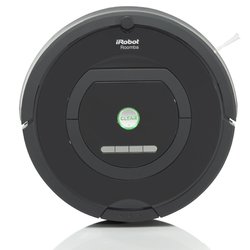
We have a mid-level Roomba, and my parents have a high-end Roomba, but as far as I can tell, the only real difference between them is price.
And, apparently, we're not the only ones to have discovered that the Roomba is the mortal enemy of the Chihuahua, which leads to endless amusement during cleanings:
We'd tried Orecks and Hoovers to get at the pet dander stuck in our carpets, but they're worthless compared to the Dyson Animal:

This thing feels like it could rip the carpet off the floor. For clearing up pet-related allergies, it's in a league of its own.
Twitter: @mattmight
Instagram: @mattmight
LinkedIn: matthewmight
Mastodon: @mattmight@mathstodon.xyz
Sub-reddit: /r/mattmight